Water damage restoration across Dallas-Fort Worth
We are not the contractor. We're a Dallas-based service network with a short list of local restoration companies who carry liability insurance, hold IICRC water
Water Damage Restoration
Water damage repair in Dallas from insured, IICRC-certified local crews: same-day extraction, structural drying documented for your insurer, then rebuild.
Learn moreEmergency Water Extraction
Emergency water extraction in Dallas, day or night: insured, IICRC-certified crews with truck-mounted extractors, usually on site within hours.
Learn moreFlood Cleanup
Flood cleanup in Dallas after creek, lake or street flooding: Category 3 extraction, tear-out, sanitizing and drying by insured, IICRC-certified crews.
Learn moreBurst Pipe Cleanup
Burst pipe cleanup in Dallas: attic lines after a freeze, slab leaks, failed water heaters. Insured, IICRC-certified crews extract and dry the same day.
Learn moreSewage Cleanup
Sewage cleanup in Dallas: Category 3 extraction, removal, sanitizing and drying after a sewer backup or toilet overflow, by insured, IICRC-certified crews.
Learn moreCeiling and Drywall Water Damage
Ceiling water damage repair in Dallas: find the source (attic unit, upstairs bath, roof), dry the cavity, replace what sagged. Insured, certified crews.
Learn moreMold Inspection
Mold inspection in Dallas by TDLR-licensed assessment consultants: visual inspection, moisture mapping, air and surface samples, and a written protocol.
Learn moreMold Remediation
Mold remediation in Dallas by TDLR-licensed contractors: containment, removal, HEPA cleaning, clearance testing and the state certificate insurers ask for.
Learn moreFire and Smoke Damage Restoration
Fire damage restoration in Dallas: board-up, firefighting-water extraction, soot and smoke removal, odor treatment and rebuild by insured, certified crews.
Learn moreStorm Damage Restoration
Storm damage restoration in Dallas: tarping, drying rain that came through a hail-damaged roof or broken window, and the interior rebuild. Insured crews.
Learn moreWater Damage Restoration Cost
What water damage restoration costs in Dallas-Fort Worth: per square foot by water category, by room, drying versus rebuild, and what insurers pay.
Learn moreWhat the job looks like
Real water damage restoration jobs across Dallas-Fort Worth: what a good crew leaves behind, and what the problem looked like before they came.
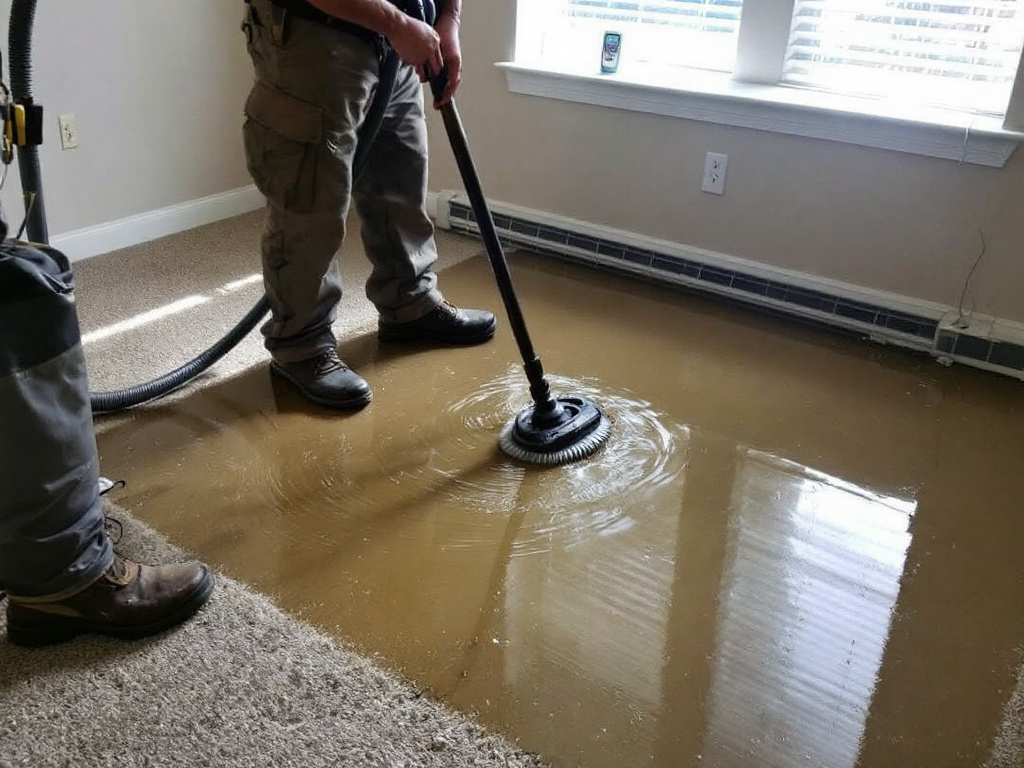
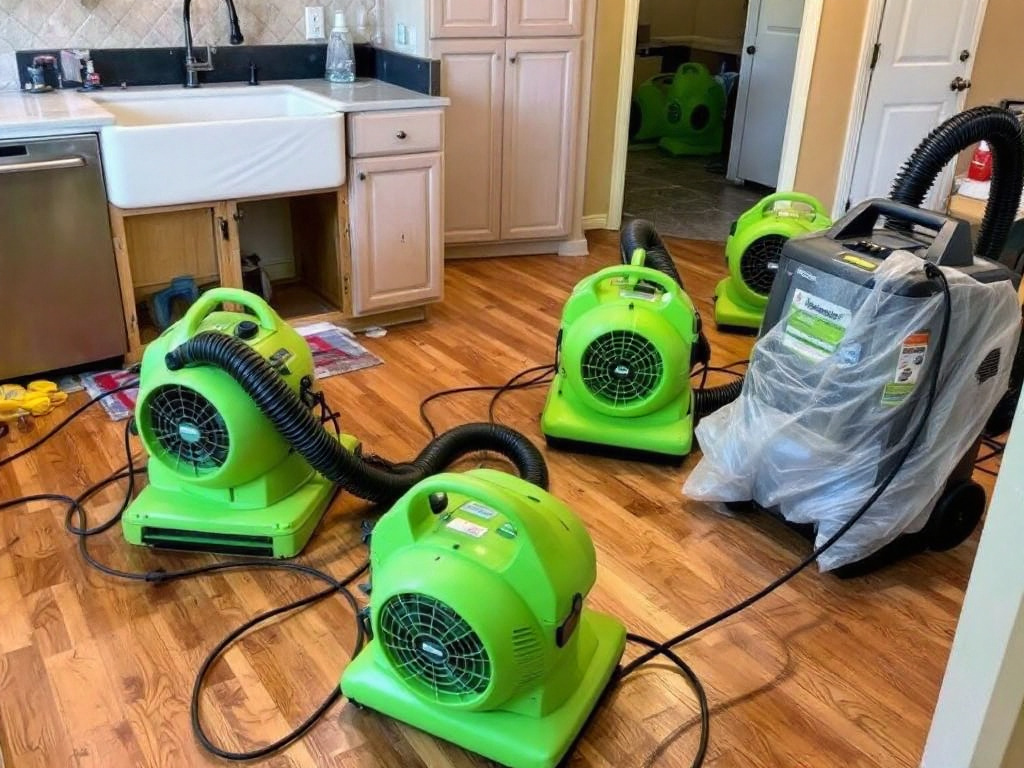
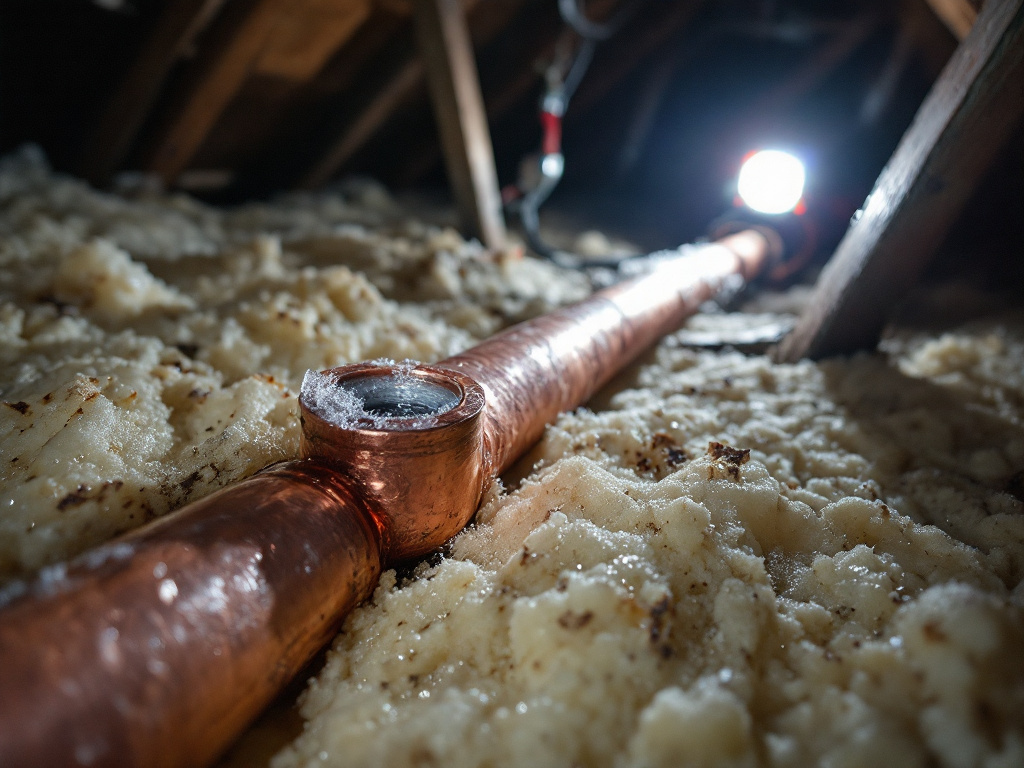
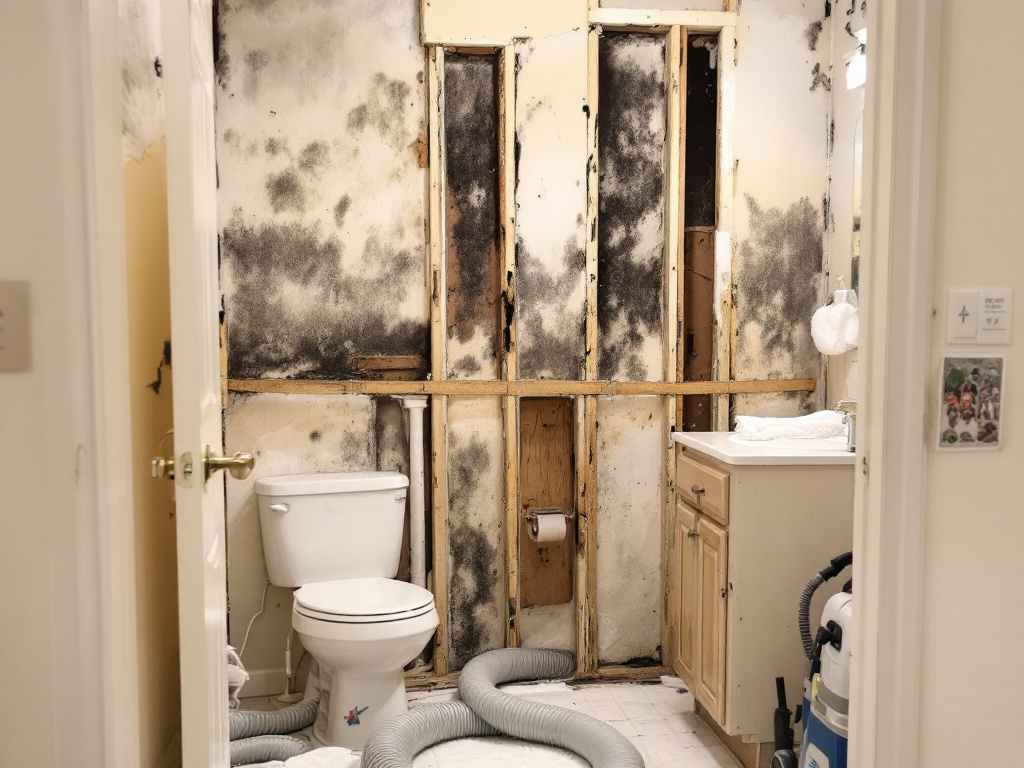
We are not the contractor. We're a Dallas-based service network with a short list of local restoration companies who carry liability insurance, hold IICRC water restoration credentials, and know the houses we have here: slab-on-grade homes with copper under the concrete in Richardson and Garland, 1990s and 2000s two-stories in Plano and Frisco with the water heater and air handler in the attic, and the lake and creek neighborhoods in Rockwall, Flower Mound and Lewisville that have flooded more than once. The company you're connected with does the work, bills your insurer or you, and warrants it. We're paid by the contractor, never by you.
What to do in the first hour
Shut the water off. Most DFW houses have a shutoff at the meter box near the curb (you may need a meter key) and another closer to the house; newer homes often have one in the utility room or garage. Turn it clockwise, then open a faucet to confirm the pressure drops. If water is coming through the ceiling, kill the breaker for the air handler and that room before you touch a switch. If it's a sewer backup, stop using every drain in the house, including the washer.
Then document before you clean. Photograph and video the standing water, the waterline on the walls, the source, and every wet piece of furniture. The Texas Department of Insurance tells homeowners to photograph before repairs begin and to keep damaged items until the adjuster has seen them. Pull up area rugs, move what you can to a dry room, and don't run the central air if the ductwork or air handler got wet.
- Shut off water at the fixture, the house valve, or the meter
- Kill power to the wet room if water reached outlets, the ceiling, or the attic unit
- Photograph and video everything before anything is moved or thrown out
- Call your insurer the same day; hidden water damage usually has to be reported within days of discovery
- Tell the crew the source, the age of the water, and whether anyone in the house has a respiratory condition
What a restoration visit looks like
The crew arrives with an extractor, moisture meters, a thermal camera, and enough air movers and dehumidifiers for the square footage. First they find the water you can't see: behind baseboards, under the vinyl plank, inside the wall cavity below the upstairs bathroom. They classify the water by the IICRC S500 standard (Category 1 clean supply water, Category 2 from a dishwasher or washing machine, Category 3 sewage or outside floodwater) and by class, a measure of how much of the room's surfaces are wet.
Then they extract, remove what can't be saved (wet pad, swollen MDF baseboard, the bottom 12 to 24 inches of drywall if the cavity is wet), set equipment, and come back daily to log moisture readings until the structure hits dry standard, usually three to five days for a Category 1 loss in one or two rooms. That log and the photos are what your adjuster will ask for.
What it costs in Dallas-Fort Worth
Extraction and drying is priced by the square foot and by category. Fixr's January 2025 guide puts clean-water extraction at $3.75 to $4.25 per square foot, gray water at $4.10 to $6.50, and black water at $7 to $7.50, with emergency fees of $50 to $200 on top. A DFW restoration company's April 2025 pricing page lands in the same place: $3 to $4 for clean water, $4 to $6 for gray, $7 and up for sewage, and $1,200 to $5,000 for most residential jobs in the metro.
Those numbers cover mitigation. Rebuilding is separate: drywall at $1.50 to $3 per square foot, a ceiling repair at $325 to $1,100, flooring at whatever you choose to put down. Mold remediation is priced on its own because it's licensed work in Texas. Get a written mitigation estimate before equipment is set and a separate rebuild scope after drying.
Insurance in Texas: sudden is covered, gradual isn't
Most Texas homeowners policies cover sudden and accidental water damage: a burst supply line, a failed washer hose, a toilet overflow, a water heater that lets go. They don't cover slow leaks and seepage, and TDI's 2018 comparison of carrier forms shows several Texas insurers cut coverage off once a leak has gone on 14 days or more. Flood from outside the house, whether Rowlett Creek or the street, is excluded from every homeowners policy and needs a separate NFIP policy with a 30-day wait.
Call your carrier the same day. Under Texas law they have 15 business days to acknowledge the claim and 15 business days after they have your documents to accept or reject it. Make temporary repairs and keep receipts; hold permanent repairs until the adjuster has seen the damage.
Where we work and what fails there
We cover Dallas, Collin, Denton, Tarrant and Rockwall counties, with pages for Plano, Frisco, McKinney, Allen, Arlington, Denton, Richardson, Garland, Irving, Carrollton, Lewisville, Flower Mound, Rockwall, Mansfield and Grand Prairie. The failures differ by neighborhood age. In 1950s through 1970s Richardson and Garland, copper runs under the slab and pinholes as the clay moves; you find out from a warm spot on the floor and a doubled water bill. In 1990s and 2000s Plano, Frisco, Allen and Flower Mound, the supply lines, water heater and air handler are in the attic, so a freeze or a clogged condensate line shows up as a ceiling stain in a bedroom below.
The February 2021 freeze made the point for the whole region: DFW sat at or below freezing for 139 straight hours, bottomed out at -2°F, and Texas insurers logged 456,531 storm claims by the end of March, 81.5 percent of them residential.
How we vet the companies we send
Texas has no state license for water mitigation and no general contractor license; the state licenses plumbers, electricians, HVAC and mold work, and cities like Dallas and Fort Worth require contractor registration with proof of insurance. So we check what can be checked: a current certificate of general liability insurance, IICRC Water Damage Restoration Technician (WRT) and Applied Structural Drying (ASD) certification you can confirm in the IICRC locator, a TDLR mold remediation license for any company we send to mold work, references from the last 12 months, and a written warranty on the rebuild.
We also ask how they bill: a written scope before equipment goes in, no required assignment of benefits, no cancellation fee if your insurer sends its own vendor. A company that shows up after a storm asking for a deposit before any work is done is not one of ours.
Four simple steps
Call or send the form
Call (469) 856-7756 or tell us what is going on. It takes a minute.
The right local crew takes it
A restoration company from our network who works your suburb, insured, with references we have checked.
They look before they price
A real look at the problem, then a written number before anything starts.
You decide
No obligation to us or to them. If it is not right, tell us and we send someone else.
Dallas-Fort Worth, suburb by suburb
Questions people ask
How fast does water damage need to be dried to prevent mold?
Within 24 to 48 hours, according to the EPA, and in a Dallas summer the short end of that is the one to plan on. Carpet pad, the paper face of drywall, and MDF baseboards are food for mold once they're wet. That's why extraction and air movers the same day matter more than anything else you do.
Does homeowners insurance cover water damage in Texas?
Sudden and accidental damage, yes: a burst pipe, a broken washer hose, a toilet overflow. Gradual leaks and seepage are excluded on most Texas forms, and some carriers cut coverage off at 14 days of leaking. Flood from outside the house is never covered by a homeowners policy; that takes a separate NFIP flood policy.
How much does water damage restoration cost in Dallas?
Most residential jobs in DFW run $1,200 to $5,000 for extraction and drying, at roughly $3 to $4 per square foot for clean water and $7 or more for sewage. Rebuilding drywall, flooring and cabinets is extra and depends on what was removed. You should get a written mitigation estimate before the equipment is set.
Should I call a plumber or a restoration company first?
Shut the water off yourself first, then both. The plumber fixes the source; the restoration crew dries the house. They're different trades in Texas, and the drying can't wait for the plumber's schedule. The restoration companies we send will tell you if the leak is something they can stop temporarily while you wait on the plumber.
Can I just run fans and a dehumidifier myself?
For a small clean-water spill on tile that you caught immediately, yes. For anything that soaked carpet pad, reached drywall, or came through a ceiling, no. Household fans don't move enough air to dry a wall cavity, and you can't see the moisture inside it without a meter. Drying that stalls at 80 percent is how a $2,000 job becomes a $9,000 mold job.
Do I need a licensed mold contractor in Texas?
If the mold covers 25 contiguous square feet or more, yes. Texas requires a TDLR-licensed mold assessment consultant and a separate licensed mold remediation contractor, and the same company can't do both on your job. Under 25 square feet, an owner may clean it, though your insurer will still want the cause fixed and documented.
Will the restoration company work directly with my insurance?
The companies we work with do. They document moisture readings daily, photograph everything they remove, and send the adjuster the same reports you get. They won't ask you to sign over your claim to start work. You still own the claim and the decisions, and you should read anything before you sign it.
What's the difference between water mitigation and water restoration?
Mitigation is stopping the damage from getting worse: extraction, removing wet materials, drying the structure. Restoration is putting the house back: drywall, paint, flooring, cabinets. Many DFW companies do both, some do only mitigation, and your insurer may pay them as two separate line items. Ask which one a quote covers.